Casa di Pace: A Hollywood Hills Estate with a Storied Past
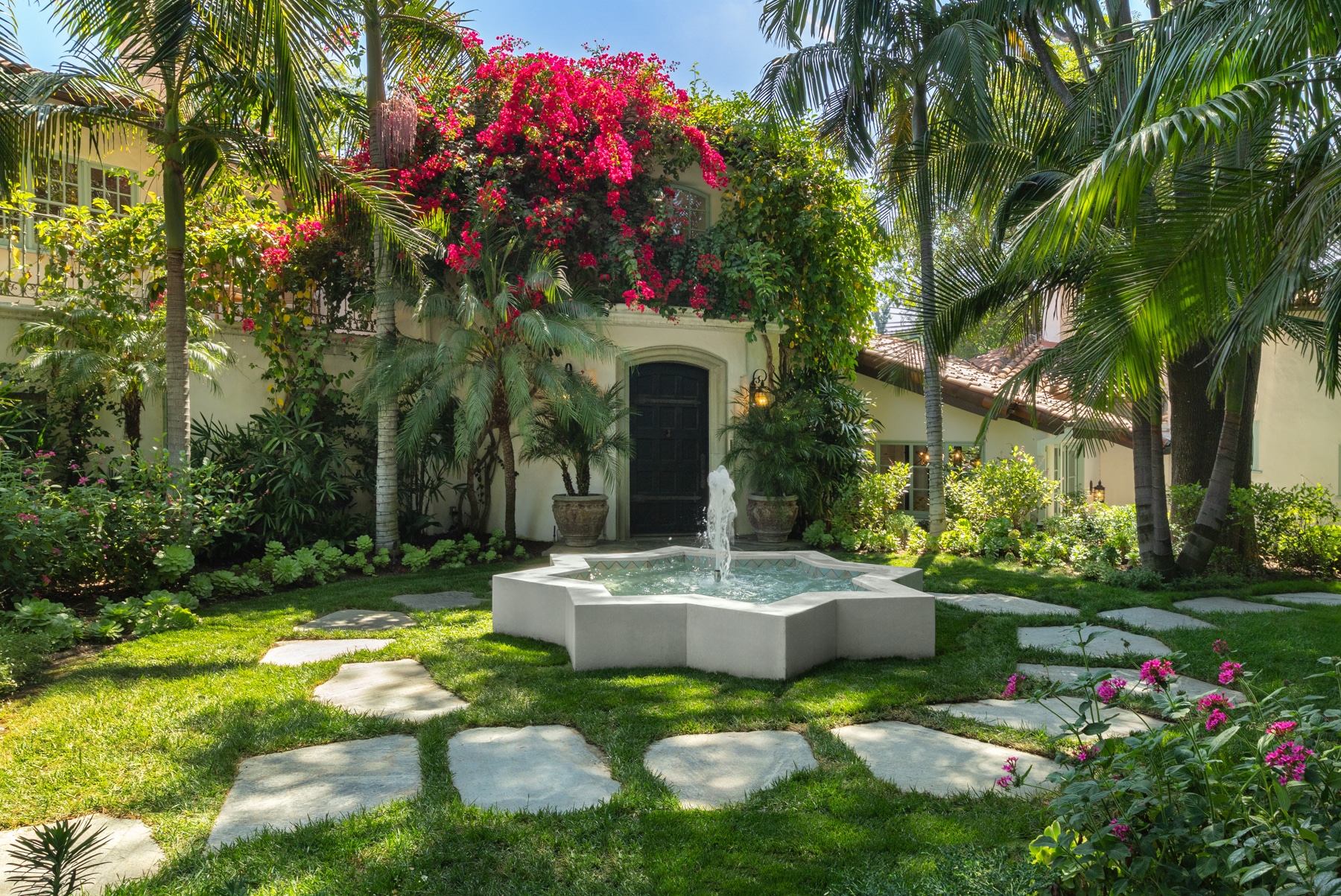
For decades, the winding roads of Nichols Canyon have offered an unlikely refuge for some of Hollywood’s most recognizable figures. Just minutes from the Sunset Strip, the neighborhood has retained a sense of seclusion that feels increasingly rare in Los Angeles. Hidden among its wooded hillsides are homes with histories as colorful as the people who have inhabited them. Among these is Casa di Pace, a Mediterranean-inspired estate whose story encompasses an influential local architect, generations of Hollywood personalities, and an appearance in one of the industry’s most nostalgic films.
The name, Italian for “House of Peace,” is particularly fitting. Concealed behind gates and surrounded by mature landscaping, the residence occupies an unusually expansive setting for the canyon, where steep terrain and narrow roads have historically shaped the neighborhood’s architecture. A broad motor court gives way to a house of generous proportions, its clay-tile floors, exposed wood beams, arched passageways, and soaring ceilings recalling the romantic Mediterranean influences that have long informed Southern California residential design. Beyond the interiors, terraces and gardens unfold across the hillside, while a championship tennis court offers a reminder of the property’s distinctly Hollywood scale.
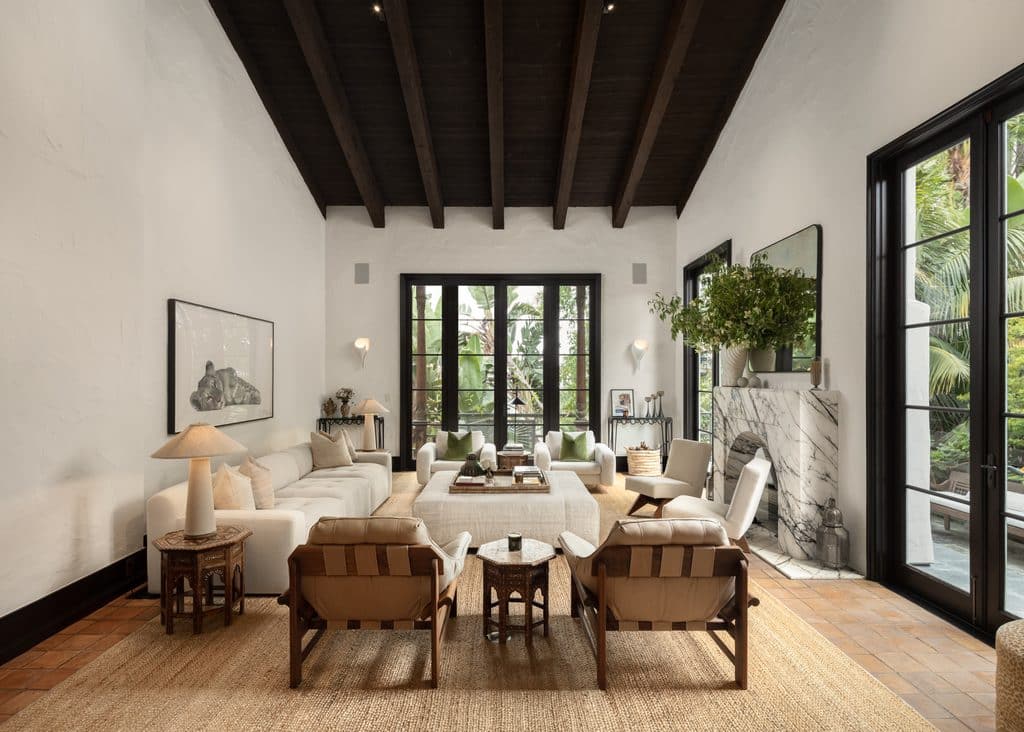
At the center of Casa di Pace’s architectural history is Fred Smathers, the designer who not only conceived the residence but once called it home. Working throughout Los Angeles from the 1960s into the 1990s, Smathers developed a following for his interpretations of Mediterranean and Spanish Revival architecture, particularly in Nichols Canyon and the surrounding Hollywood Hills. His houses combined the romance of traditional European design with the expansive rooms, dramatic proportions, and indoor-outdoor living that characterized Southern California’s residential culture.
Smathers’s clientele reflected the neighborhood’s close relationship with the entertainment industry. Among those associated with his residential work were Hayley Mills, Doc Severinsen, William Friedkin, Quentin Tarantino, and Richard Marx. Television journalist Kelly Lange maintained a particularly longstanding relationship with the designer, collaborating with him on several homes over the course of two decades. Casa di Pace, however, offers a more personal glimpse into his architectural sensibility. Designed as his own residence, it reflects the qualities that made his work appealing to Hollywood’s creative community: privacy, theatrical spaces, and an unmistakable sense of occasion.
The home’s subsequent history reads like a cross-section of Hollywood itself. Richard Dreyfuss, Kevin Costner, and Ryan Seacrest are among the prominent figures associated with the estate over the years. Seacrest even opened its doors for an Architectural Digest tour, offering a rare look inside a property whose privacy has long been central to its appeal.
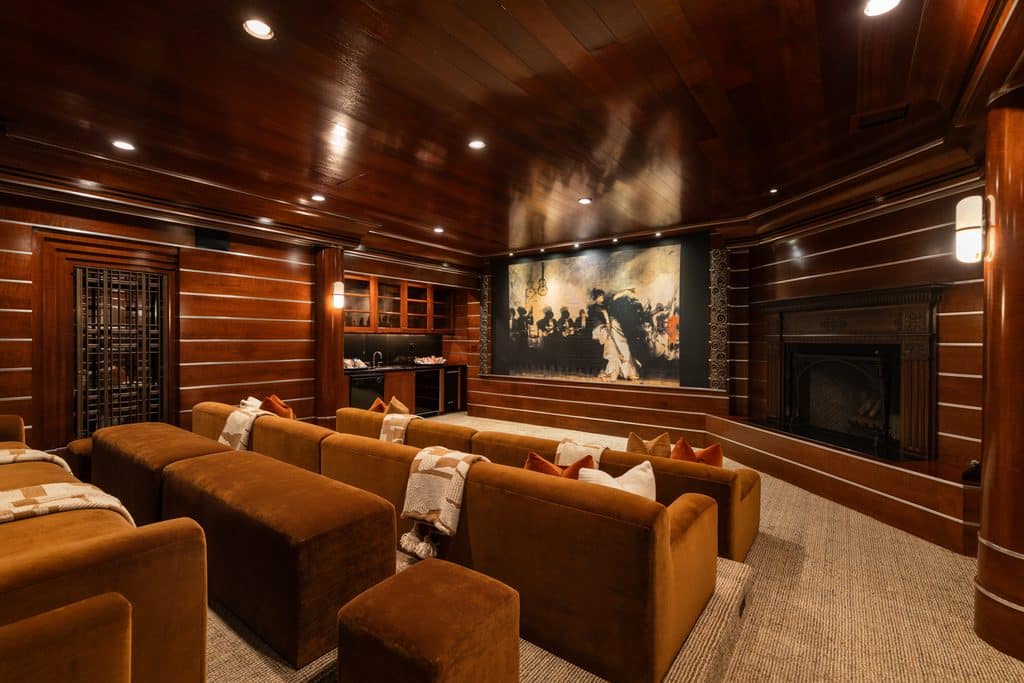
Perhaps the most fitting chapter in the home’s Hollywood story came in 2019, when its screening room appeared in Quentin Tarantino’s Once Upon a Time in Hollywood. The film, itself a love letter to the Los Angeles of the late 1960s, found an appropriate setting in a residence so closely connected to the city’s entertainment history. With its richly appointed interiors and separate exterior entrance, the theater evokes an era when private screening rooms were as much a part of Hollywood social life as the films themselves.
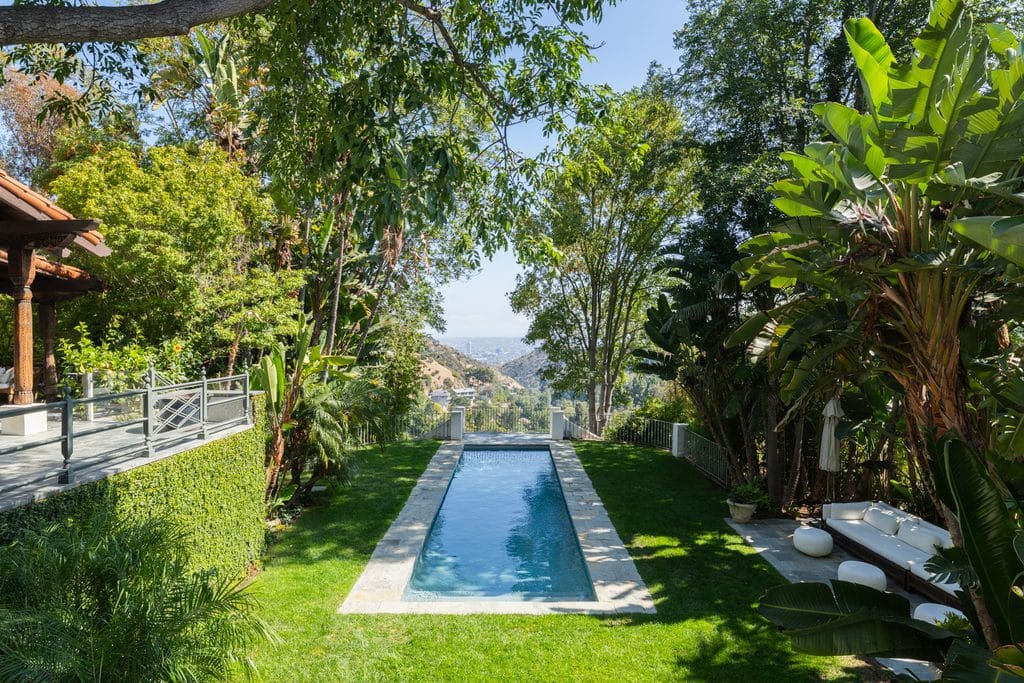
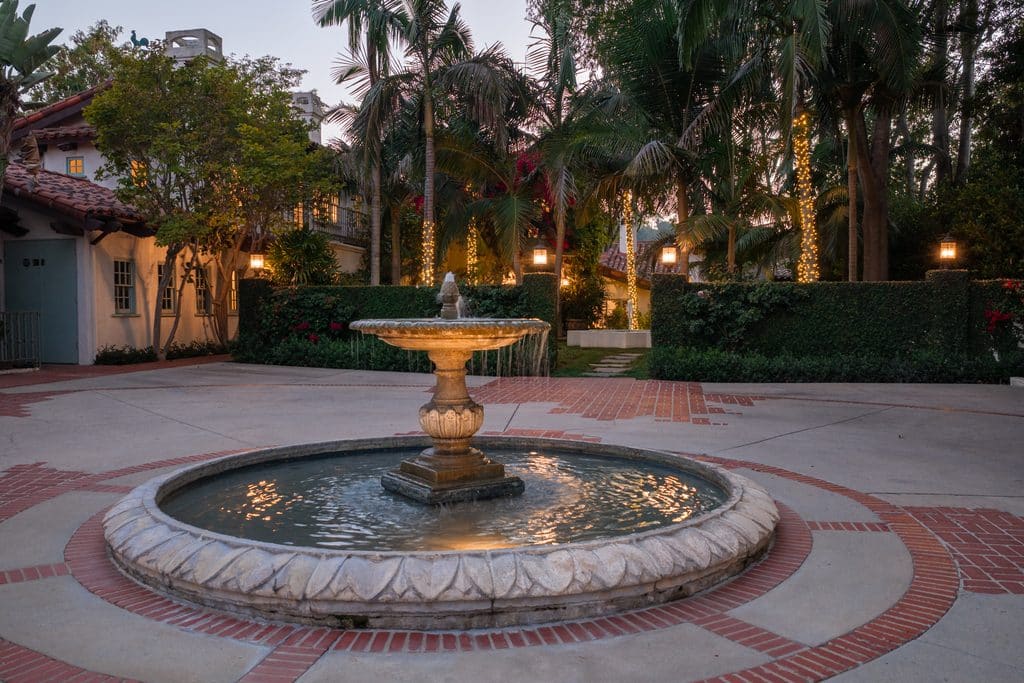
Yet what makes Casa di Pace particularly intriguing is the way its architectural character has endured alongside its changing inhabitants. Its dramatic double-height spaces, intimate courtyards, and connections to the surrounding landscape speak to a period of Los Angeles residential design that favored individuality over uniformity. A separate guest house, with its wood-paneled library, soaring beamed ceilings, and fireplace, adds another layer to the estate’s distinctive architectural composition.
In a city where houses are frequently reinvented, demolished, or stripped of their original character, Casa di Pace offers a glimpse into a different Los Angeles. Its history is inseparable from the architect who imagined it, the personalities who passed through its doors, and the canyon that has sheltered it for decades. More than a collection of Hollywood associations, it is a reflection of the enduring appeal of Nichols Canyon itself: a place where architecture, privacy, and the mythology of Los Angeles have always been closely intertwined.
Casa di Pace is located at 2809 Nichols Canyon Road in Los Angeles. The property is represented by Linda May of Carolwood Estates.