Grace Weaver, Benedikt Taschen, and the Art of Collecting
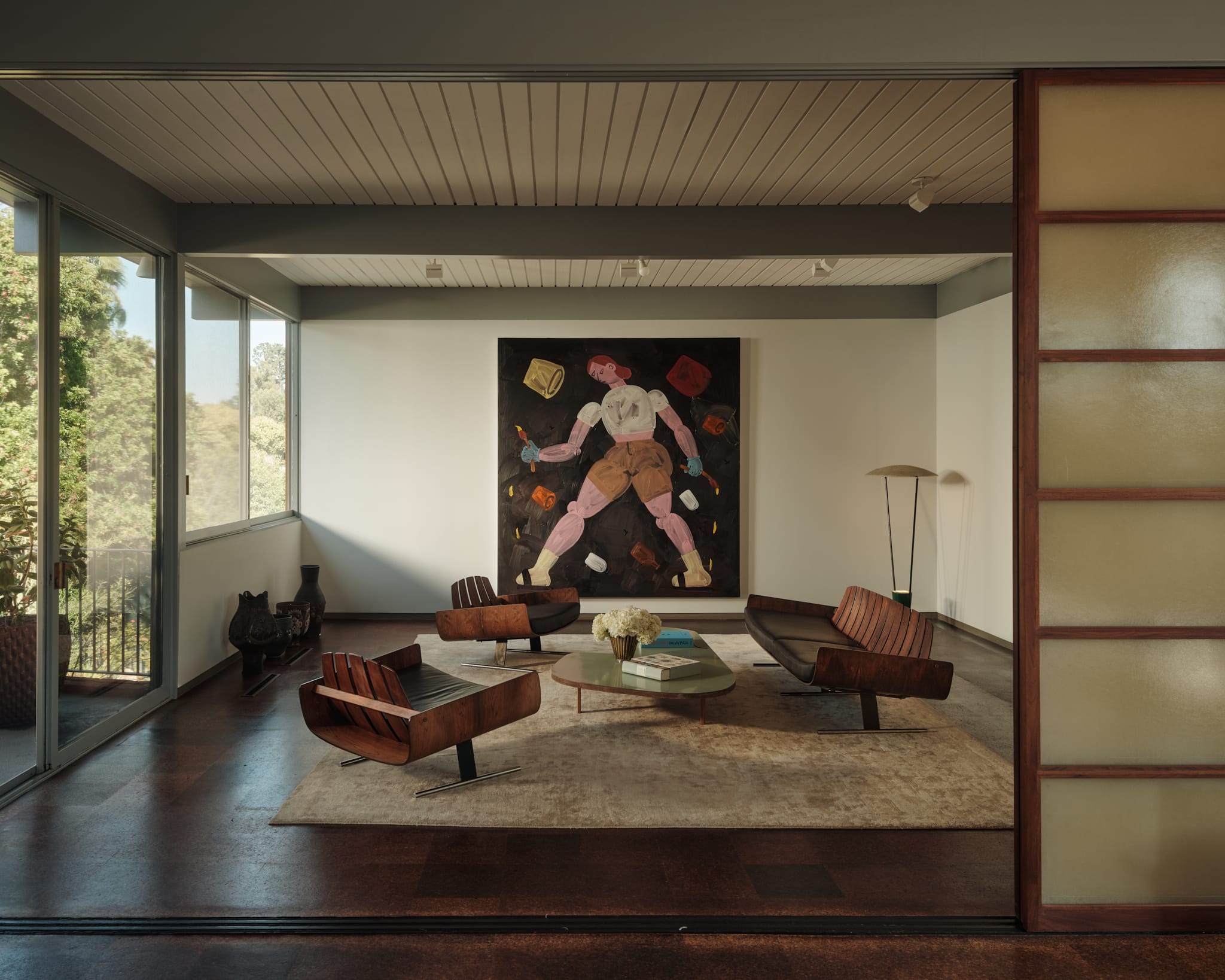
Within the walls of a celebrated midcentury residence in Beverly Hills, the expressive figures of contemporary artist Grace Weaver find an unexpected architectural setting. The paintings, part of the personal collection of renowned art-book publisher Benedikt Taschen, occupy the Adelman House, a residence designed by Thornton Abell and O’Neil Ford that once formed part of Charlie Chaplin’s legendary Beverly Hills estate. Here, the intersection of art, architecture, and collecting offers a glimpse into the sensibilities of one of the publishing world’s most influential tastemakers.
For decades, Taschen has built a reputation for championing art and visual culture, publishing everything from historical masterworks to provocative contemporary photography and design. His personal collection reflects an equally wide-ranging curiosity, bringing together works that challenge convention and celebrate individuality. Among the artists represented is Grace Weaver, whose monumental figures, expressive gestures, and distinctive use of color have established her as a compelling voice in contemporary figurative painting.
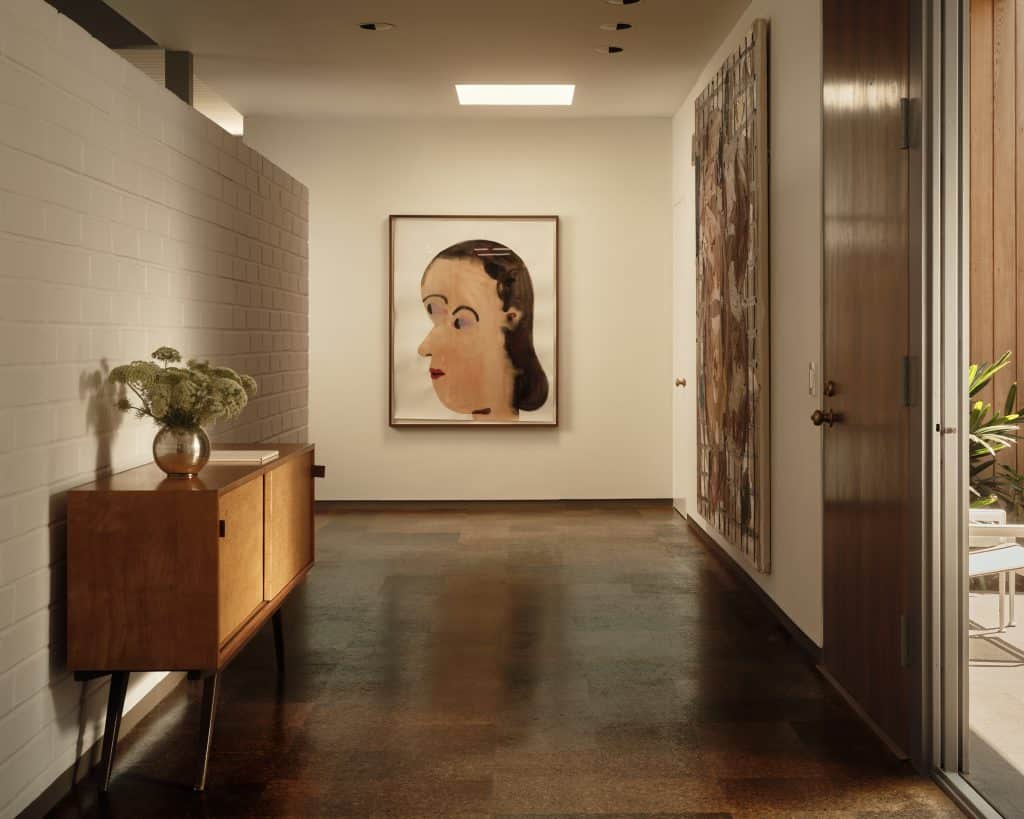
Born in Vermont in 1989, Weaver studied at the University of Vermont before earning her Master of Fine Arts from Virginia Commonwealth University in 2015. Her work explores the emotional complexities of everyday life, often through the experiences of women navigating relationships, solitude, and the familiar rituals of modern existence. Rendered with exaggerated proportions, elongated limbs, and simplified features, her figures inhabit a world that feels at once recognizable and slightly surreal.
There is an unmistakable physicality to Weaver’s paintings. Bodies bend, stretch, and fold into compositions where gesture often communicates more than expression. Her confident brushwork and saturated palette lend even the quietest scenes a sense of movement, while the ambiguity of her subjects leaves room for humor, vulnerability, and introspection. Beneath their apparent spontaneity lies a sophisticated engagement with art history, drawing upon traditions of figurative painting while developing a visual language distinctly her own.
Weaver’s practice has continued to evolve in recent years. Earlier compositions frequently depicted the routines and social encounters of contemporary urban life, while more recent work has turned toward timeless subjects, including flowers, motherhood, and the female form. Her paintings explore the relationship between figure and abstraction, often employing a wet-on-wet technique that allows colors and gestures to merge directly on the canvas. The result is work that feels immediate and instinctive, yet deeply considered.
This evolution was evident in Parataxis, her recent exhibition presented across Galerie Max Hetzler and Soy Capitán in Berlin. The paintings revisit familiar domestic scenes through elongated figures, simplified architectural settings, and compositions that transform ordinary gestures into something almost ceremonial. The exhibition continued Weaver’s exploration of the human form while demonstrating her growing interest in the relationship between painting, space, and the rituals of everyday life.
Her work has attracted international attention, with exhibitions at institutions including the Yuz Museum in Shanghai and Neues Museum Nürnberg in Germany. Paintings by Weaver are also held in prominent public and private collections, reflecting the growing recognition of an artist whose work moves comfortably between contemporary observation and historical reference.
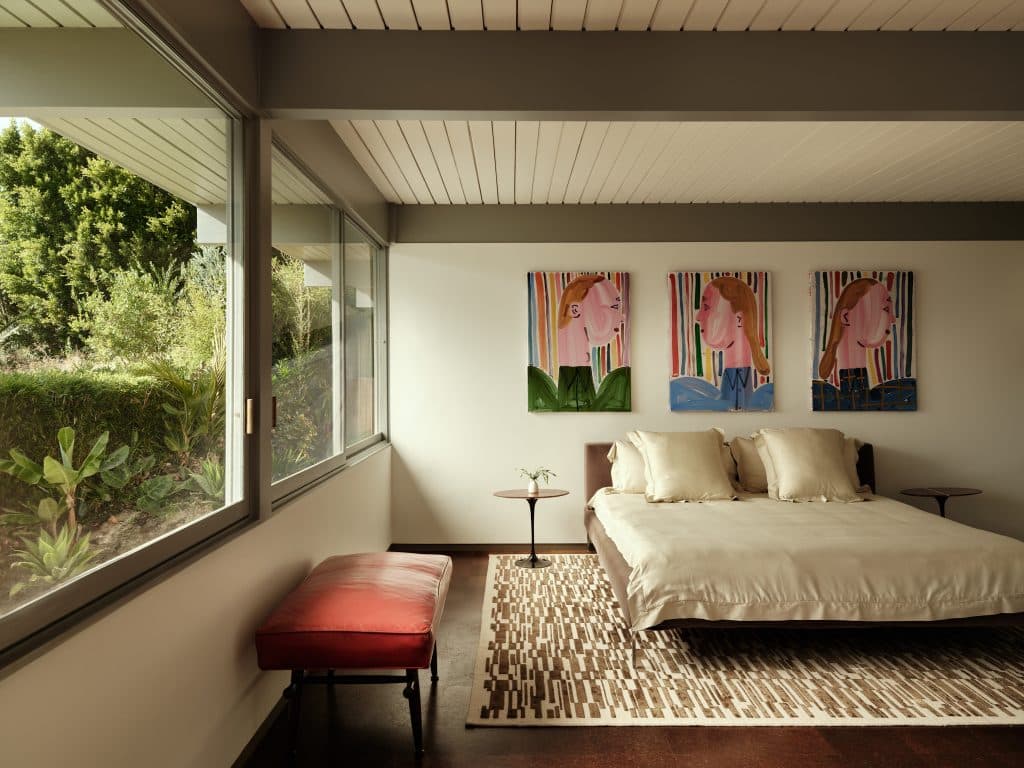
At the Adelman House, Weaver’s paintings take on another dimension. Their expressive forms and vibrant compositions offer a striking counterpoint to the restrained geometry and thoughtful proportions of the residence’s midcentury architecture. The juxtaposition is particularly compelling given the home’s history and its association with Taschen, whose appreciation for art and design has long transcended conventional boundaries.
There is something fitting about Weaver’s work inhabiting a residence with such a rich creative lineage. Once part of Charlie Chaplin’s Beverly Hills estate, the house represents a period when Los Angeles was establishing its own architectural identity, shaped by designers who embraced the region’s climate, landscape, and informal approach to living. Decades later, Taschen’s collection introduces a contemporary artistic dialogue into those same spaces.
The relationship between art and architecture has always been central to the character of a home. At the Adelman House, Weaver’s paintings are more than objects on display; they reflect the personal vision of a collector and the enduring ability of art to transform the spaces we inhabit. It is a meeting of different creative generations, where midcentury architecture and contemporary painting find common ground in their shared appreciation for form, expression, and individuality.
The Adelman House, located at 1035 Summit Drive in Beverly Hills, is represented by Linda May of Carolwood Estates.
Explore the work of Grace Weaver through Galerie Max Hetzler and follow the artist on Instagram.